


Your home is already educating your children.
It’s shaping their habits, their values, what they like, and how they see the world — often in ways you don’t notice.
Two years ago, I noticed something unsettling.
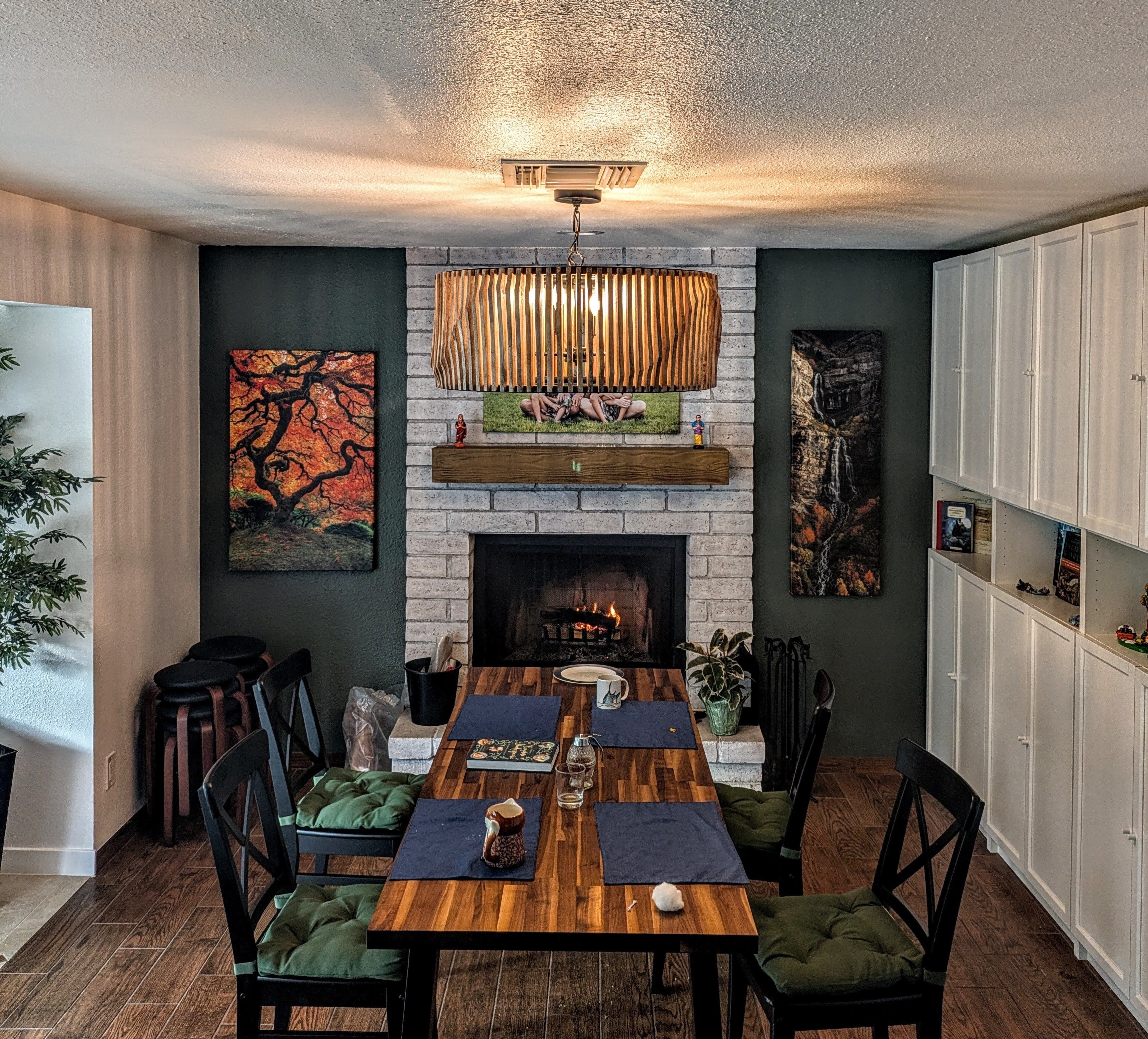
We rarely, if ever, had family meals together.
We homeschool. My family spends a lot of time together… but meals? For some reason, we were always eating separately, perched around the kitchen peninsula. Even when we were eating at the same time, we didn’t eat together.
I talked about it. We tried to fix it. Nothing really changed.
Then I redid our dining room.
Our original dining room had slowly been taken over as a homeschool club space. We have a small home, and the table now housed pencils, paper, erasers. It was a great space — but not for eating.
One day, I cleared it off. I put down placemats. And at the very next meal, everyone sat down together without a single word from me.
No reminders. No systems. Just a space that invited us to eat together.
That small change raised a bigger question:
✨What does our house invite?✨What does it discourage?
There are plenty of blogs that will help you choose paint colors, find your style, or declutter your space.
This isn’t about that.
This post is about something far more foundational:
Designing a home that trains your children in the values you care about—automatically, quietly, every day.
Below, I share the steps we took to intentionally align our home with the habits, ideas, and values that we espouse as a family.
May it help you live a more intentional life too.
The Art on Your Walls Is Not Neutral
Toddlers are more helpful when surrounded by images of others being helpful.
Stop. Read that again.
We are primed by what we see. The images around us shape what feels normal, expected, even possible. Our environment changes our attention, what we focus on, and ultimately our behaviors.
And yet most of us have a completely accidental collection of things on the walls of our home — things we inherited, picked up on sale, or chose because they “looked nice.”
But your walls are speaking.
They are telling your children:
what is beautiful
what is worth noticing
what kind of life is being lived
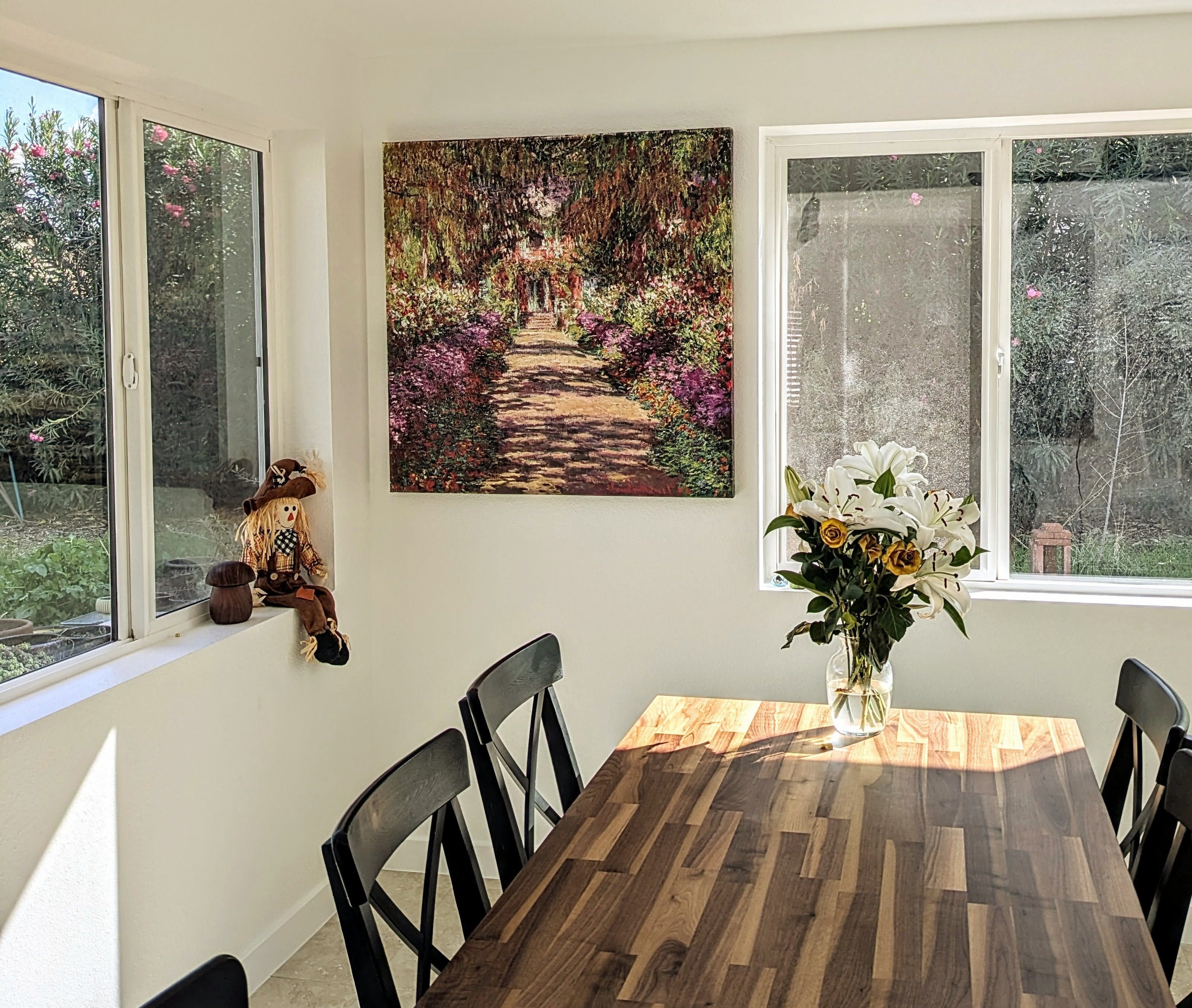
When we enclosed our patio to create a homeschool room, I chose the artwork carefully.
Every piece shows a path — a journey into something unknown but beautiful. A figure moving forward. A landscape that invites exploration.
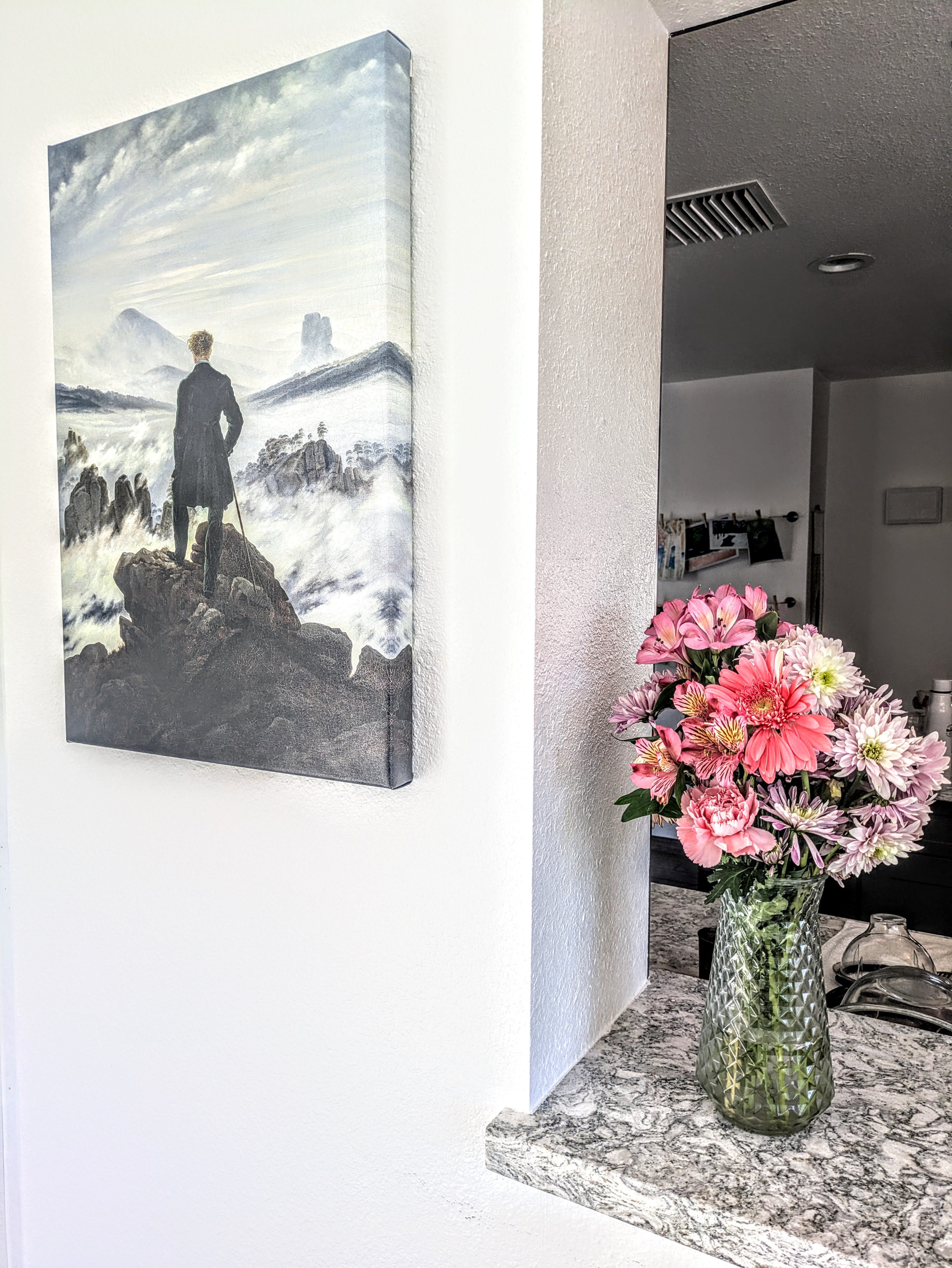
Because that’s what I want my children to feel: that they are on a journey worth taking.
In other rooms, I’ve made different choices. Spaces that invite play. Walls that display my children’s own artwork—because I want them to see that their contributions matter.
None of this is accidental.
Your environment shapes behavior. What are your walls shaping?
Spaces That Invite Connection
If you want your family to spend time together, your home has to make that easy. Our dining room change made that obvious. So we applied what we learned to other rooms.
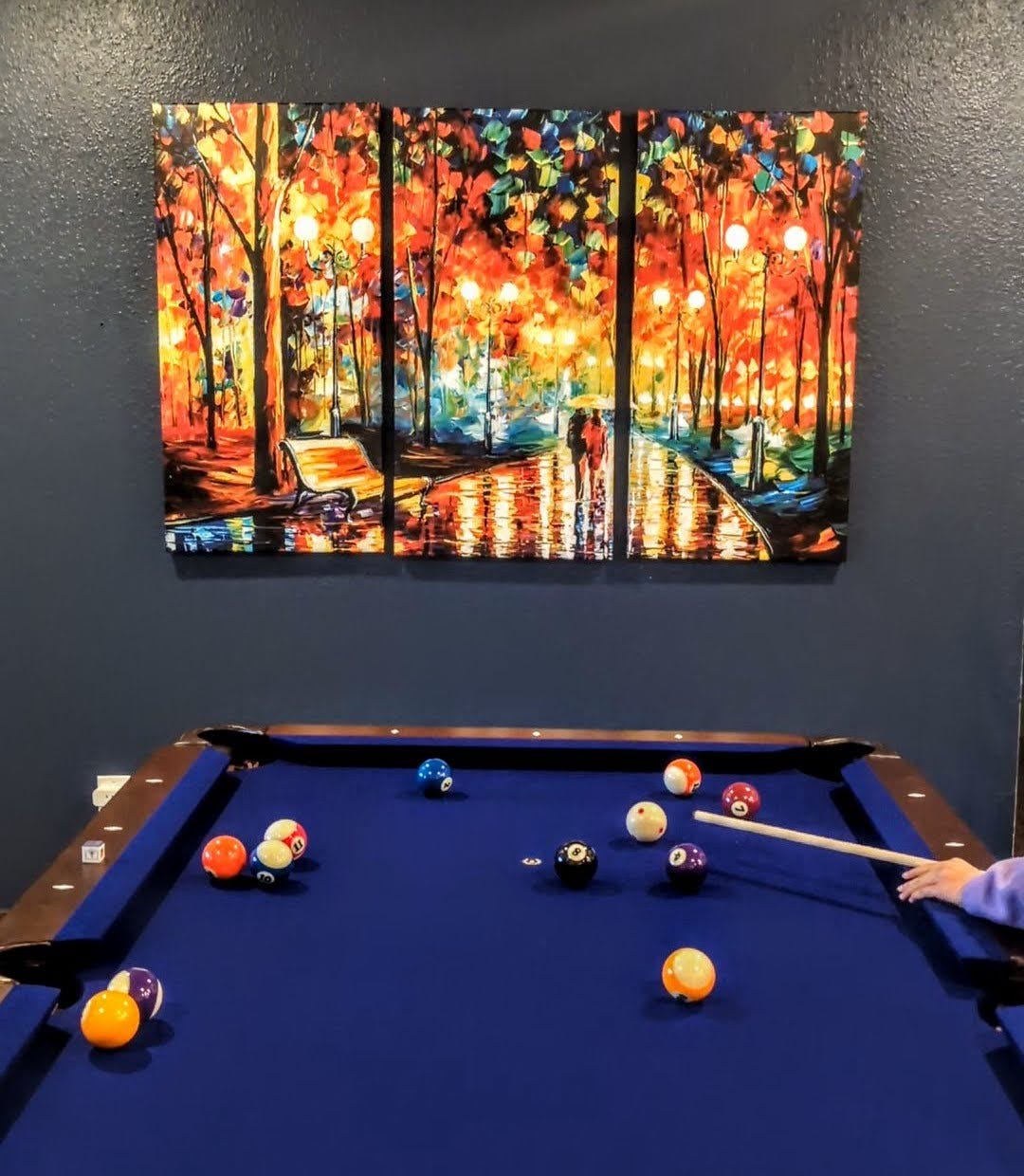
We turned the center room of our home into a game room. It draws us in. It beckons, “Play Together.”
It silently answers the question: What do we do here?
The layout of your home is constantly answering that question for your children. What does your home invite your children to do?
A Place to Learn
Not everyone believes in a dedicated homeschool space. But children benefit from signals and clear transitions that tell their brain: now we focus. In our home, we have a simple ritual. We play classical music. We light incense. We sing. We pray. Then we sit together to learn.
It’s not elaborate. It’s not expensive. But it is consistent.
My husband has his own version before he begins work. Same principle.
Focus is something children must learn to enter and maintain.
Your environment can either fragment attention—or gently gather it. Which does your home do?
What Does Your Living Room Say?
When my children were little, we removed the TV from our living room. Not because TVs are inherently bad — but because we didn’t want it to define who we were.
A TV in your main living space answers the question: What do we do together?
For many families, the answer becomes: we watch television.
We wanted the answer to be → we read books, we play together, we learn.
The point isn’t whether you should have a TV.
The point is this: Your home is always teaching your children. What do you want it to teach yours?
A Home Built Around Reading
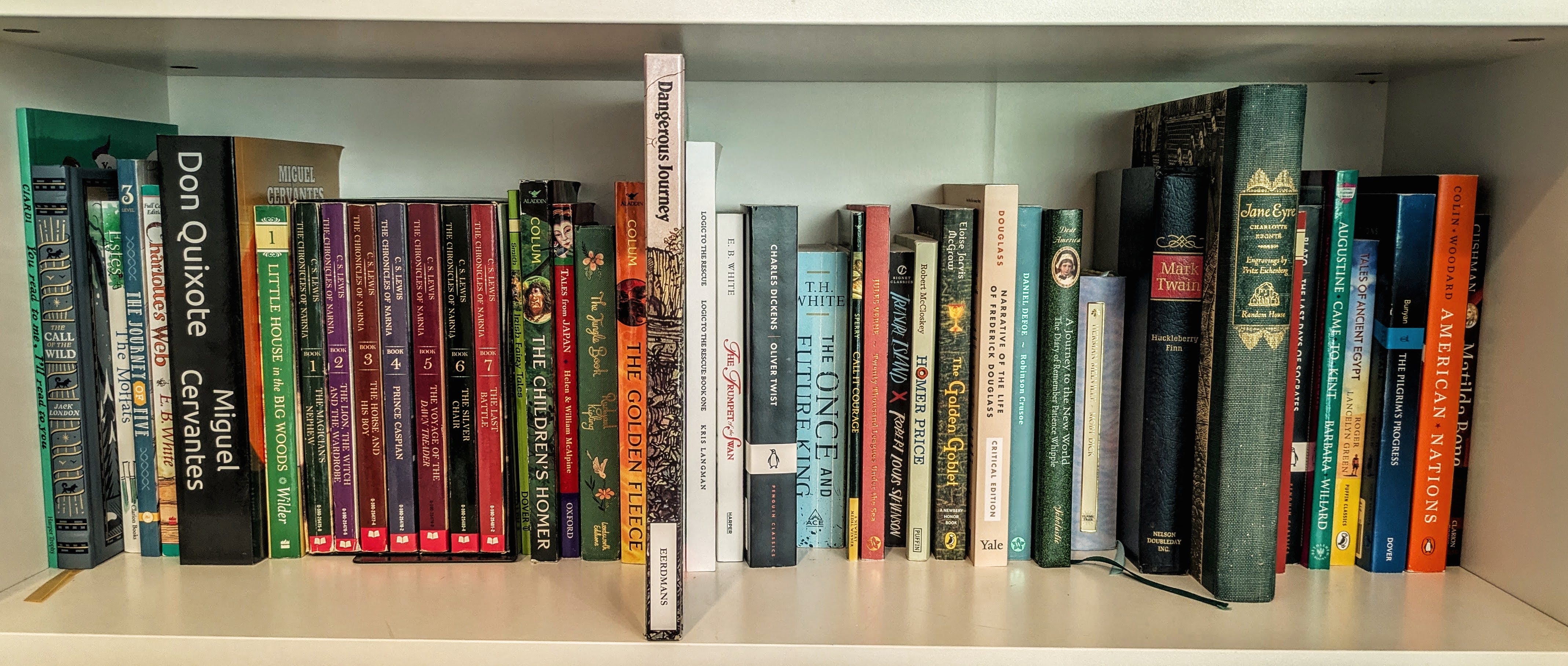
If you want your children to be readers, they need to be surrounded by books.
Not tucked away on a single shelf. Not reserved for school time. Visible. Accessible. Within arm’s reach. Books you read. Books they’re drawn to. Books that stretch them.
Because proximity matters.
A child is far more likely to pick up a book that is already part of the environment than one that requires effort to find or go get at the library.
When my children were younger, we used the library heavily. Now, I’m more selective. There are far too many books and too little time.
I want what surrounds them to be worthy of their attention.
What your child encounters daily becomes what they naturally reach for. Are books in your child’s reach?
Designing a Life, Not Just a Home
It’s easy to think of our homes as neutral backdrops.
They’re not.
Every object, layout, and visible choice is quietly shaping your child’s expectations of life.
What do we do when we’re bored?
What do we do together?
What do we reach for?
What do we value?
Your home is answering those questions. You don’t need a perfect house (I don’t have one!). You don’t need more space, more money, or better furniture.
But you do need to ask: What is my home training my children to become?
And then, gently, intentionally, begin to align it. Clear the dining table. Hang paintings that make you feel something. Bring books into sight.
With time, these small changes become something much bigger.
They become part of your child’s inner voice.
✨Because children don’t just live in a home. They become what that home invites them to be.
If you are looking for more on how to Stop Managing Time – How to Start Living by Your Values, How to Build a HOME Library, or Tools That Build a Curious Home, you might like these posts.
Until next week, remember: Children Are Our Most Important Work.
~Dr. Claire
PS. I got the classic painting reproductions at…
icanvas LINK to the classic fine artists. There are other options out there. We liked this one. They even let you split up large canvases into smaller pieces which is a cheaper option - thus our pool table with 3 panels.

We have been talking about ways to reorganize our home to be better conducive to homeschooling our children. This came at the exact right time!
Great points! Yes, everything in a child's environment is already forming and shaping that child, even if they (and their parents) are not aware of it. That's why the home should be beautiful, the books, movies, music, games, toys, art, clothes--all of it should be wholesome and beautiful because it is already educating the imagination, which will be the foundation for everything else.
I wrote about this recently on my Substack: https://thehazelnut.substack.com/p/how-to-educate-a-child-long-before