


Childhood has been standardized.
Most kids learn the same things, in the same way, at the same time.
But that’s not what I wanted for my kids.

I wanted a childhood filled with rich, unusual adventures—places where they could find themselves and their passions.
In most of my writing, I talk about the educational foundations—math, writing, reading—because they are the ground from which a child’s mind grows. But as I wrote in What Does It Mean to Be Educated, they aren’t enough.
Some of the most enriching, enchanting, and enjoyable parts of our homeschool have come from the unusual paths we’ve wandered down. Some we stumbled into. Some I hunted for. All of them brought us joy.
As you contemplate the New Year (it’s getting close), here are a few wondrous worlds you might want to add to your children’s world.
These have brought us so much joy. I hope they bring your family joy too.
Origami
Ancient art. Used by NASA. Deep cultural roots. And yes—it strengthens math skills (more on that in Improve Your Kids’ Math Without Doing Math). My youngest spends hours folding; her creations decorate our home. It’s geometry disguised as beauty, and one of the easiest, gentlest hobbies to bring into your home.

Classical Drawing
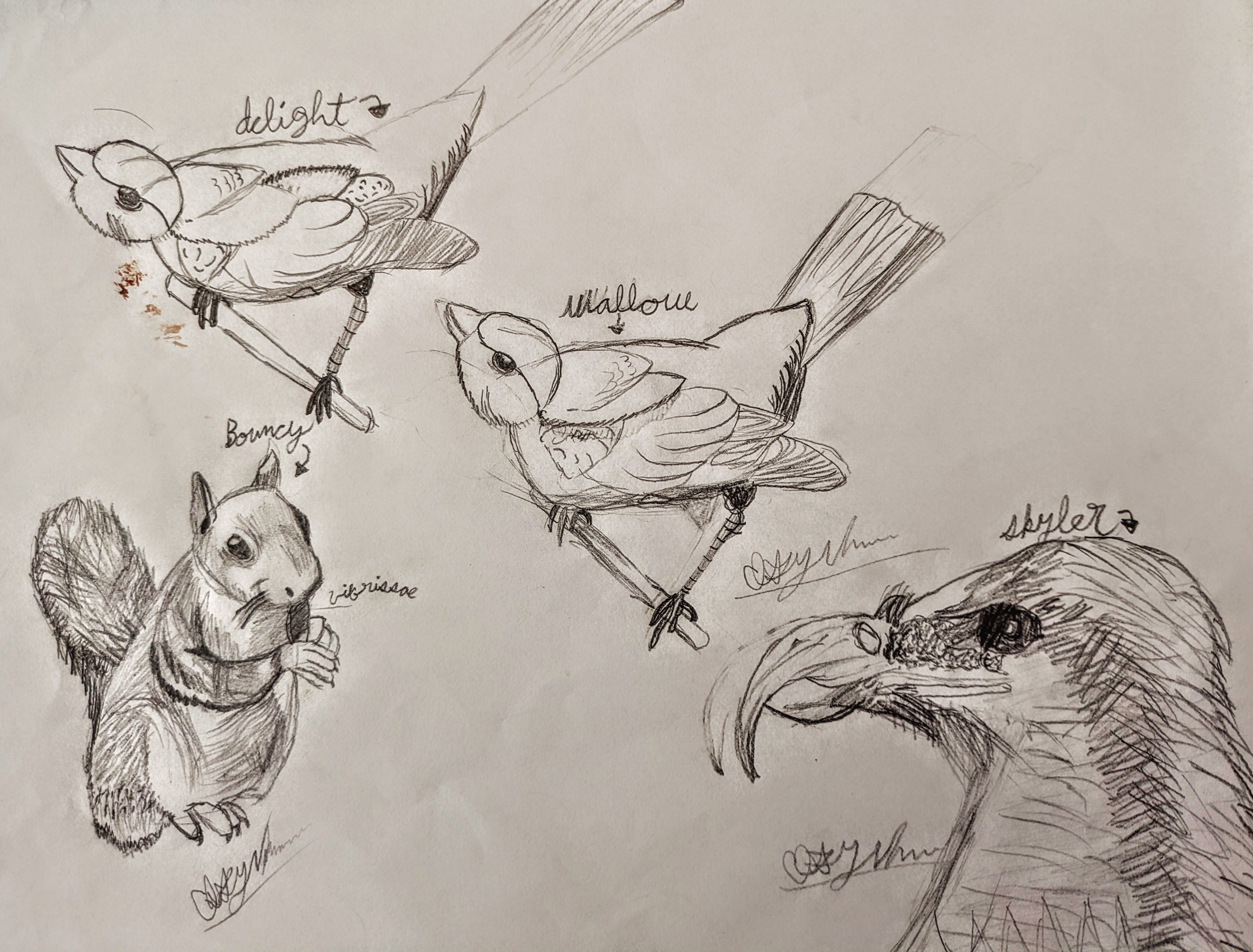
There’s art class… and then there’s ART class. One of the best decisions we made was enrolling our kids in a true classical drawing course (resources at the end): perspective, shading, anatomy. It’s physics and biology wrapped in graphite and paper.
The magic of classical drawing is that it teaches fundamentals. Once a child truly sees light and form, they can draw anything. They aren’t trapped replicating whatever a YouTube tutorial teaches.
And remember—as I wrote in Children’s Brains Are Ticking Clocks: Use It or Lose It—these skills are best taught young.
Art History
Few things ignite my children’s writing like studying a painting. Yes—writing.
Great art awakens the senses.
How did the artist paint the light? What story is unfolding? What would it feel like to stand in that landscape? What emotions are being carried?
Deep art study alone is worthwhile. But if you want to go further, consider an actual art history class.
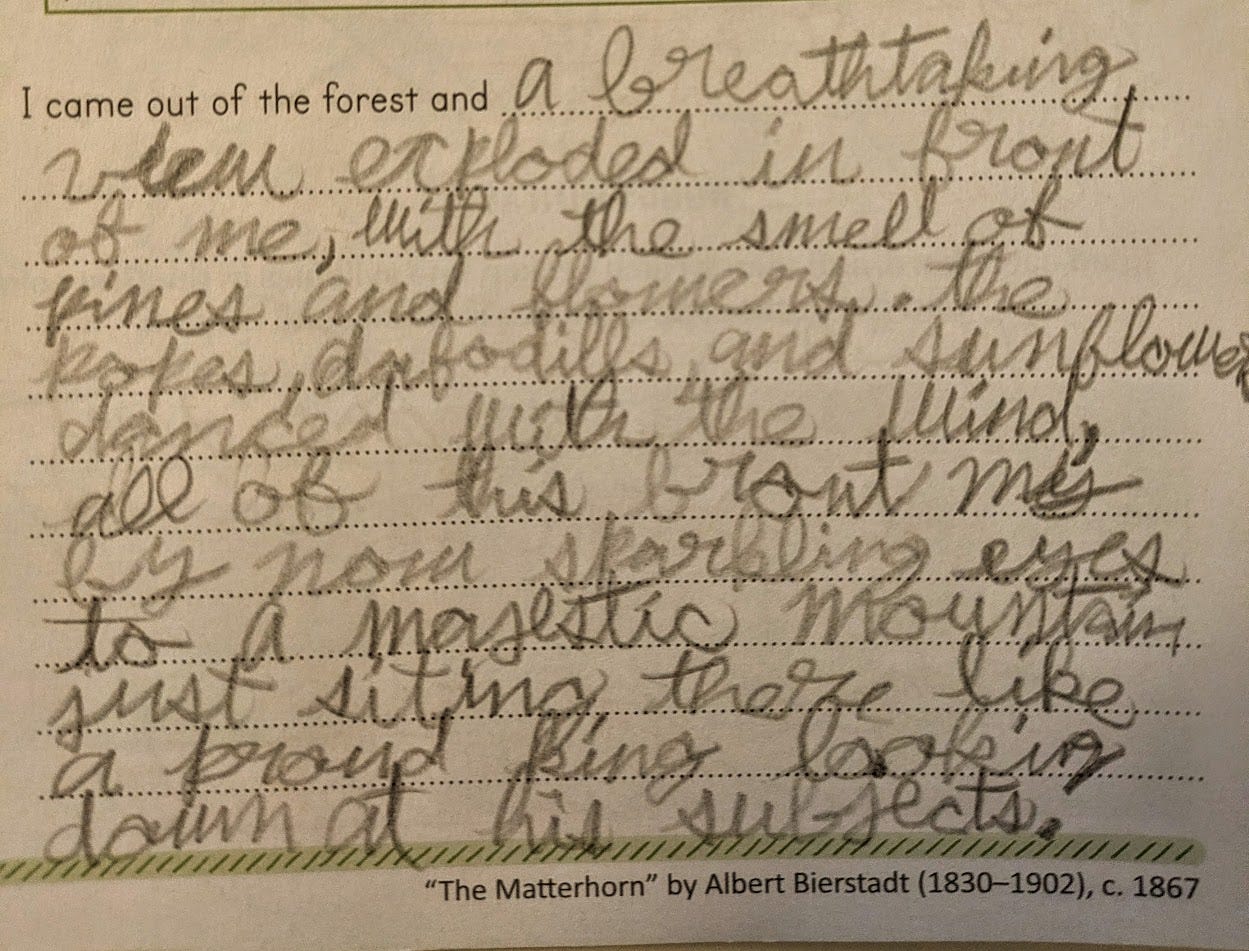
My daughter at age 9 while looking at The Matterhorn by Bierstadt
“I came out of the forest and a breathtaking view exploded in front of me. The poppies, daffodils, and sunflowers danced with the wind. All of this brought my now sparklingly eyes to a majestic mountain just sitting there like a proud king looking down at his subjects.”
Birding, Geology, Insects (or Any Serious Nature Identification)
While most kids live indoors, glued to glowing rectangles, your kids can live in the real world—the one filled with wings, stones, tracks, and tiny mysteries.
One of the greatest skills you can give your children is the quiet art of observation. It’s foundational for scientists (See: The Path to Polymath), but honestly, it’s foundational for being human.
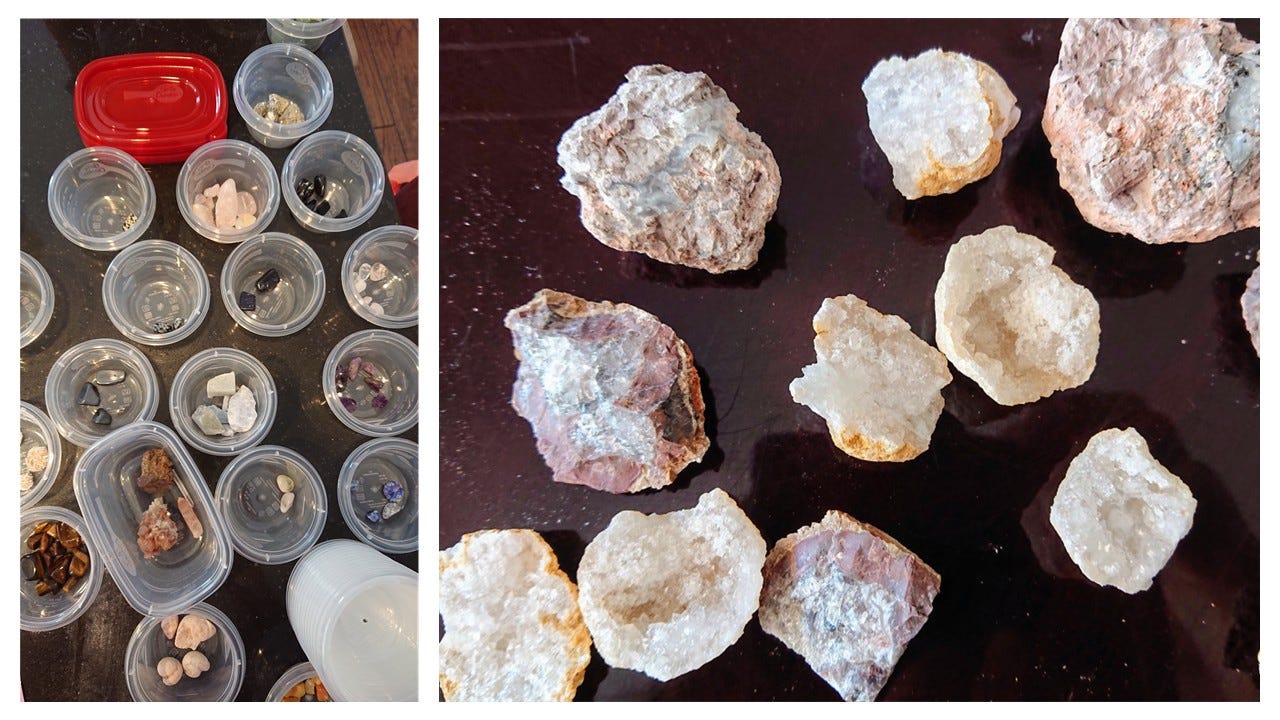
Last year, my youngest organized our fossil collection for our “curiosity fair.” The learning didn’t just come from the fossils—it came from the identification, the research, the conversations that followed.
Pick something your children love. Help them collect, classify, and display. It’s such a beautiful ride.
Gardening
A garden is a portal. Plant a seed, and you invite an entire living world in.
Plant vegetables and fruit trees, and you invite bees, butterflies, mantises, insects, and birds to eat all of those things - plus earthworms! Kids stop fearing bees as “things that sting” and start recognizing them as the reason we have apricots and pears.
Grow a garden, friends. Grow a garden.

Mapmaking
Maps have been a long-standing obsession in our home. We do weekly mapwork with history and often create our own maps. Most adults can’t name the countries of the world—my kids can locate them, describe them, and tell you their stories. For how we do this, read Google Maps Can’t Teach Your Kids This.
Music Appreciation (Classical & Beyond)
Classical music transformed our homeschool. I had no idea how deeply my kids would fall in love with it. They request composers with reverence. I explain how we cultivated that love HERE.
But this year, we moved beyond classical.
We took the kids to see Jake Shimabukuro at a small venue at the Musical Instrument Museum. Watching someone that world-class reminded me: our children need to see greatness. Sometimes you have to see extraordinary talent to believe extraordinary talent is possible.
Show your kids greatness—so they know it’s within reach.
More musical adventures are definitely in our future. I hope they’re in yours too.
Drama & Performance
Did you really think I’d make a list without Shakespeare?
If you want to hear my elementary-aged kids reciting the Bard, you can listen to them HERE and HERE.
But your kids don’t need to love 400-year-old plays to benefit from drama. A serious drama class—improv, staging, vocal work, character building—builds confidence, presence, and courage in ways few other things can.
Cooking from Scratch
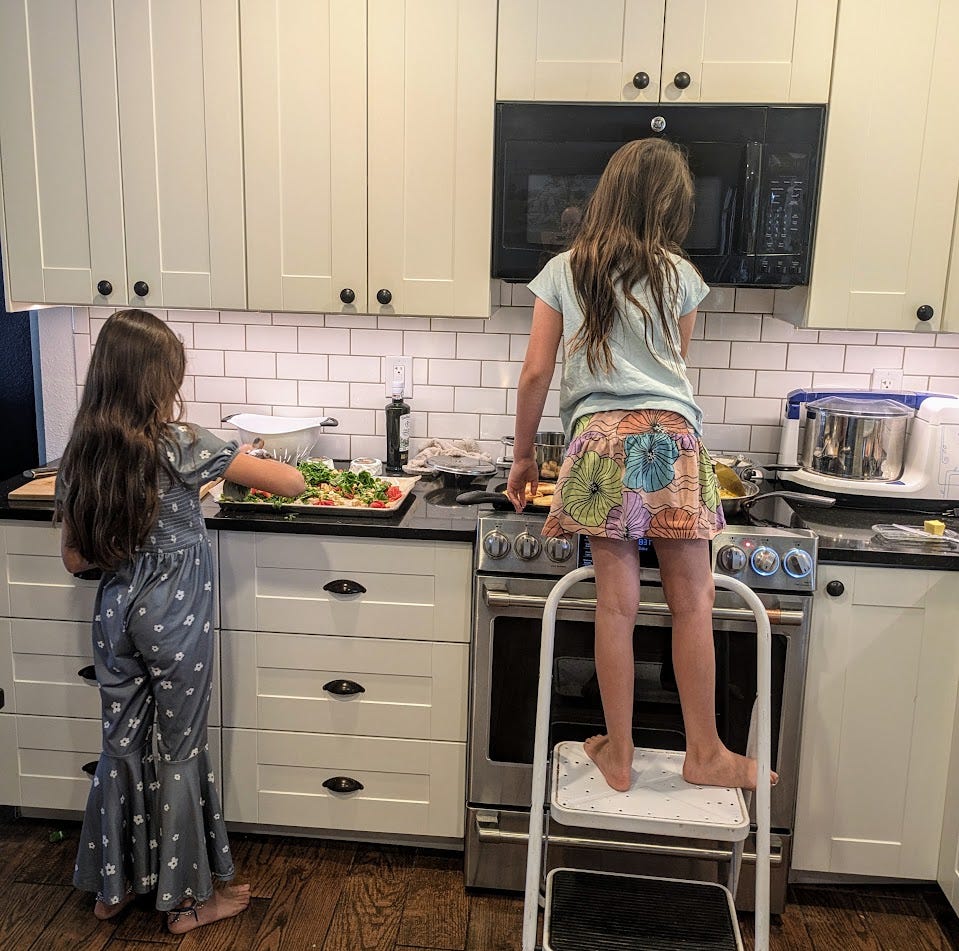
Cooking is a meta-skill: sequencing, estimation, time management, sensory awareness. Teaching my kids to cook this year taught them far more than how to scramble eggs or roast vegetables. It built confidence, competence, and independence. Start simple, breakfast and easy pastas a great place to begin.
Sewing, Crochet, Knitting
There’s something deeply satisfying about making something with your hands.
My kids first learned finger crochet in Montessori, but it keeps coming back up often in the colder months. A few years ago, they sewed doll clothes from a simple beginner book (see picture). Recently, my oldest knit a wrap for her injured toe.
Yes, it’s practical. But it’s also a spatial reasoning exercise—another quiet way to strengthen the brain for math and geometry.

Progymnasmata-Style Creative Writing
Yes, it’s writing—but not the school version.
Creative writing has become “express yourself and hope for the best.” Kids aren’t being taught what makes a story good. A great story needs suffering, reversal, universality, and a message trying to reach you.
The ancient Greeks taught this to nine-year-olds. I started mine at eight.
Help your kids craft stories that persuade, move, and matter.
Final Thoughts
This isn’t a list of things you must do. It’s an invitation to imagine something larger for your children’s lives.
Start small.
A single symphony.
A single poem.
A single seedling.
Let your children wander into the wide, wild world while they’re still young enough to be transformed by it.
Most kids never find out how big the world really is.
Make sure yours do♥️
To the paid supporters who make these public essays possible: thank you.
This week’s bonus isn’t fancy—but it is the resources behind today’s piece: the origami books we actually use, the online classical drawing class my kids loved, our favorite map curriculum, the free art-history course, and more.
Your support lets me keep the ideas free for everyone♥️
P.S. Annual memberships are 30% off until January 1 if you’d like to join us.