


Last week, I invited us to reclaim Natural Philosophy moving beyond rote science experiments or the mere accumulation of facts to awaken disciplined wonder in our children. You can read that post here. Today, I want to take you deeper, showing how we can bring this philosophy into our homes and classrooms in practical, meaningful ways.
✨Once upon a time, studying science meant stepping outside and looking up.
But it was so much more than that.
It was about becoming a certain kind of person. One who notices what others miss.
On an ordinary night about 2,120 years ago in ancient Greece, Hipparchus stepped outside and noticed something incredible — a brand new star shining where none had been before.
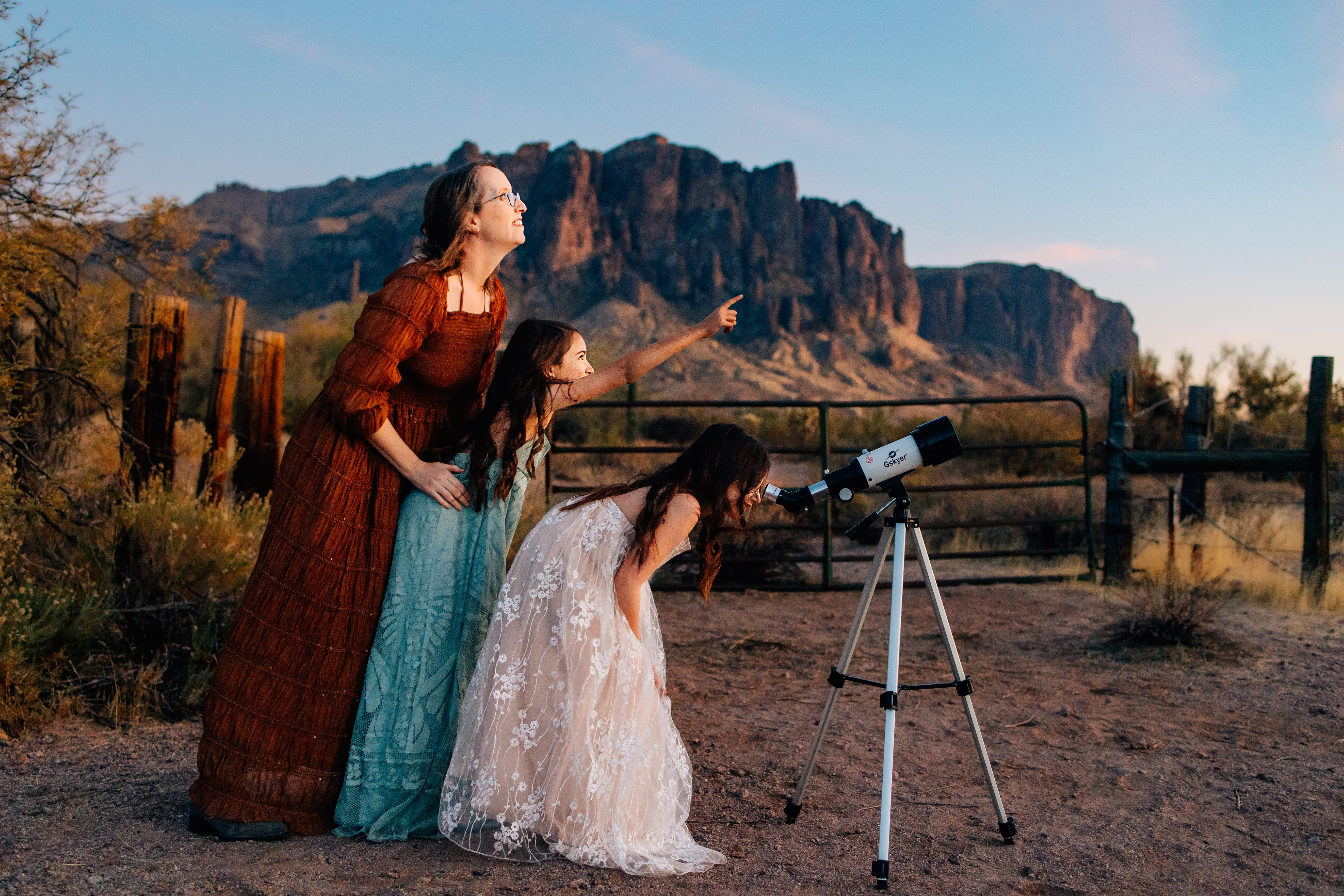
This marvelous event would change not just his life, but ours thousands of years later. Hipparchus would painstakingly catalog all the visible stars in the sky (can you imagine!). He marked their brightness, their coordinates, and cross-referenced his observations with earlier records of the Greeks and Babylonians.
It was an extraordinary act of disciplined wonder.
This is what science once formed in people.
Today, I struggle to find a science curriculum I like. All fall short because…
I’m not teaching science—I’m raising disciplined thinkers who pursue knowledge and truth.
I want my children to stand in awe at the beauty of this marvelous world — and then know how to pursue deeper knowledge through careful, direct exploration of that world.
What does disciplined wonder look like in practice?
It looks like inspiring awe in geology through a rock cycle demonstration, or grasping the vastness of the universe by walking the planets scaled out with sidewalk chalk. It looks like explaining that the earth beneath our feet is actually moving, changing, and remaking itself every day through exploring plate tectonics — and then casually mentioning that the Moon is made entirely of igneous rock (the kind that on Earth usually comes from volcanoes). All things we did in our science club this year.
Then on a walk, I listen as my 9-year-old takes that spark of wonder and turns it into questions:
“If the Moon is made of igneous rocks, why is it white? Igneous rocks are usually black. Are there white igneous rocks? Oh — pumice is kind of white. What is it made of? Is pumice the closest rock we have on earth to the moon? How is it different from the black ones? Can we look at all our igneous rocks and figure it out?”
✨Inspire awe ✨Form questions ✨Pursue knowledge
Disciplined Wonder.
Today, I’ll outline the steps I’m using to teach my own children (and our science club) natural philosophy. This is the heart of how I teach science — disciplined wonder in action.
Some of these ideas may surprise you and delight you. For example, I recommend doing fewer experiments and explain why doing less will take you further.
Ready? Let’s go!
Joining our community of thousands of parents also gives you access to posts like The Four Stories Your Kids Need to Read Everything Else, Curate a Love for Classical Music in Your Children, and my You Can Homeschool course.