


Children must have books, living books. The best is not too good for them; anything less than the best is not good enough. — Charlotte Mason
Most parents think teaching reading begins with the alphabet.
It doesn’t.
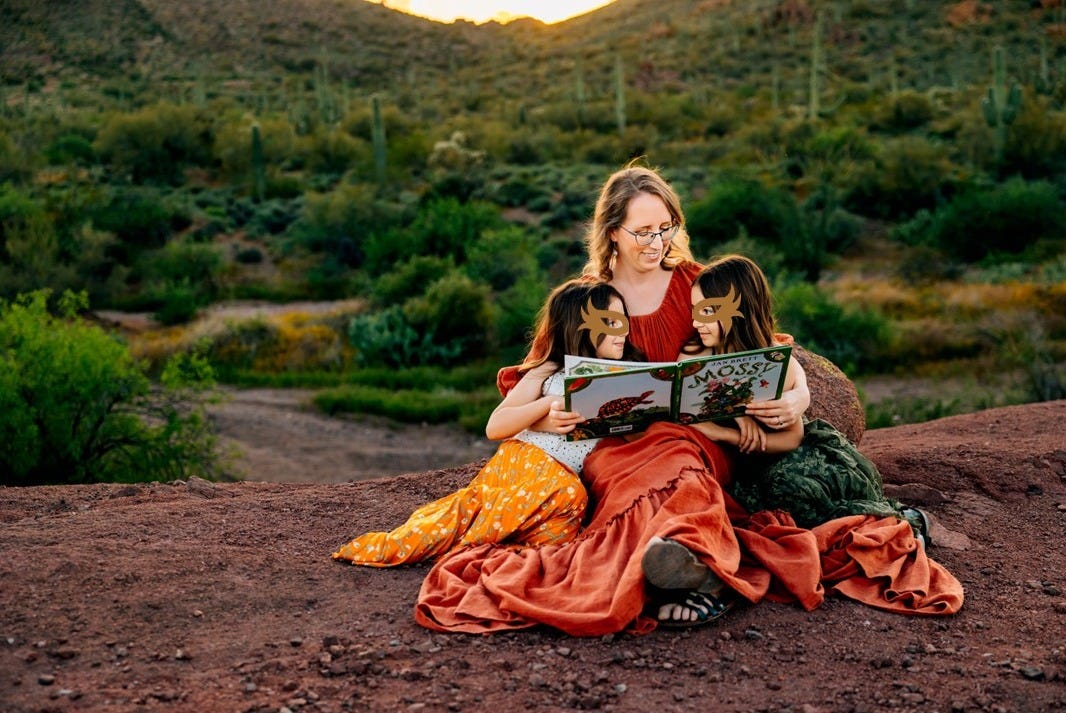
Learning to read begins the first time you pull a child onto your lap, snuggle into the couch, and open your favorite book from childhood.
From this place of comfort, your child learns that books are sacred. That being read to is being loved and cared for.
We don’t start teaching children to read by teaching them the skills.
We start by helping them fall in love with stories.
There are few things I loved more than teaching my youngest to read.
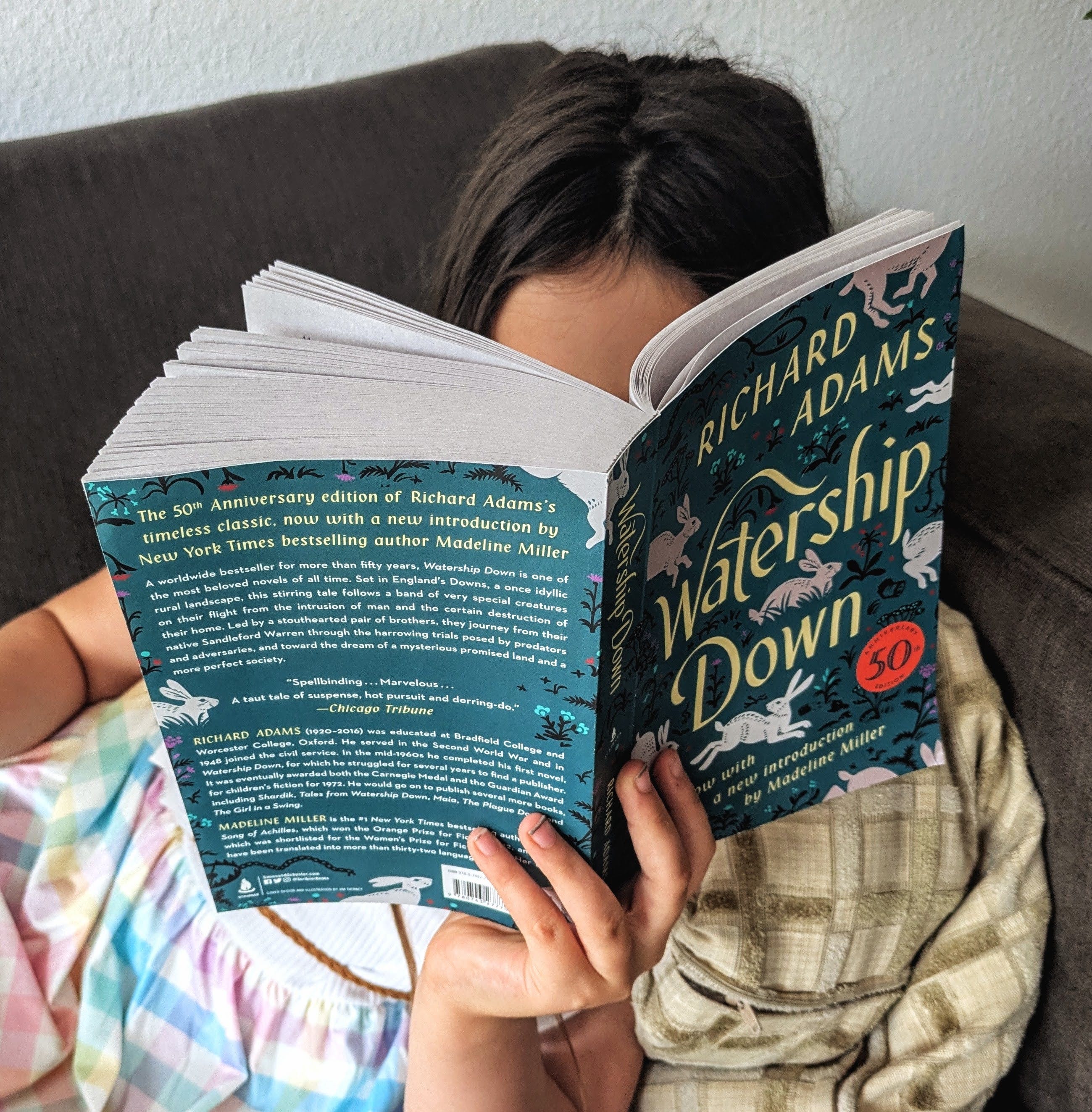
It started with A says ah, B says buh and ended last fall with her reading me The Pilgrim’s Progress at 9 years old (excerpts). She no longer needs me to spot-check her reading. She reads every day, increasingly longer and more complex books. Recently Watership Down (see photo).
Of all the things I’ve done as a mother and educator, this is one I know I got right.
Sadly, I didn’t get to teach my oldest to read. School taught her to read, but they didn’t teach her to love it. That was my gift to her. Now she reads 100s of books a year. Just this week, she reread The Wonderful Wizard of Oz in 2 days simply because she loves it.
It’s cliché but true: when a child falls in love with reading, it doesn’t just change their childhood — it reshapes the entire trajectory of their life.
Because reading is never just reading. A child curled up with a book is discovering other ideas, other minds, other worlds beyond them.
What follows isn’t another “how-to”, it’s a framework that helps our children fall madly in love with reading while also equipping them to read some of the richest literature ever written.
Here, we merge joy and rigor into one.
May your home become a place where children fall in love with reading♥️
PS. This post assumes you have read Falling in Love with Learning: A Joyfully, Rigorous Guide to the Preschool years. Much of that post’s advice (example: poetry, audiobooks, early readers) holds true in the ages of 5-7. I won’t repeat it so we can go deeper.
Next week, we’ll focus on ages 8-10 with Deepening a Love for Reading. If you’d like to get it in your inbox, subscribe below.
✨Before Children Read, They Learn to Love Books
Start by Reading the Best Books Ever Written
The ages of 5–7 are a precious window. But one that does not last. The linguistic centers of the brain are in the final stretch of their most active period. This is the most important time to fill your children’s brains with rich, complex literature — ideally the classics.
Nourish them with The Four Stories Your Kids Need to Read Everything Else - namely Fairy Tales, Global Folktales, Shakespeare, and The Bible. Almost every book in the Western tradition is a reimagining or echo of what came before, and those origins can often be traced back to this core set of foundational stories (resources on how to introduce these gently below).
Reading your children these stories now allows them to begin drawing parallels and recognizing allusions years earlier than most children. By ages 8–10, many will naturally begin noticing connections that are often not taught until high school.
But the most important reason to read these? They intuitively teach our children what a good story sounds and feels like influencing the books our children choose and the ideas they are drawn to the rest of their lives.
You are developing the literary taste of your children. It is worth taking seriously.
Let Them Inhabit Beautiful Worlds
Beatrix Potter fills her stories not just with sophisticated vocabulary and gorgeous syntax, but with beautiful illustrations and virtues. I read her books over and over to my children, but my fondest memory was my 7 year old reading them to me. The books of her childhood that I had read to her over and over… were now hers. It felt like magic, truly.
These types of books quietly teach our children that the world, while sometimes harsh, is also beautiful. Fairy tales serve the same purpose. Characters are always saved by fairy godmothers or enchanted animals.
So take your children to the Hundred Acre Wood with Winnie-the-Pooh and wander riverbanks with Frog and Toad. Fill your home with stories that will stay with your children — and their children — for the rest of their lives.
Don’t Just Read them Fairy Tales
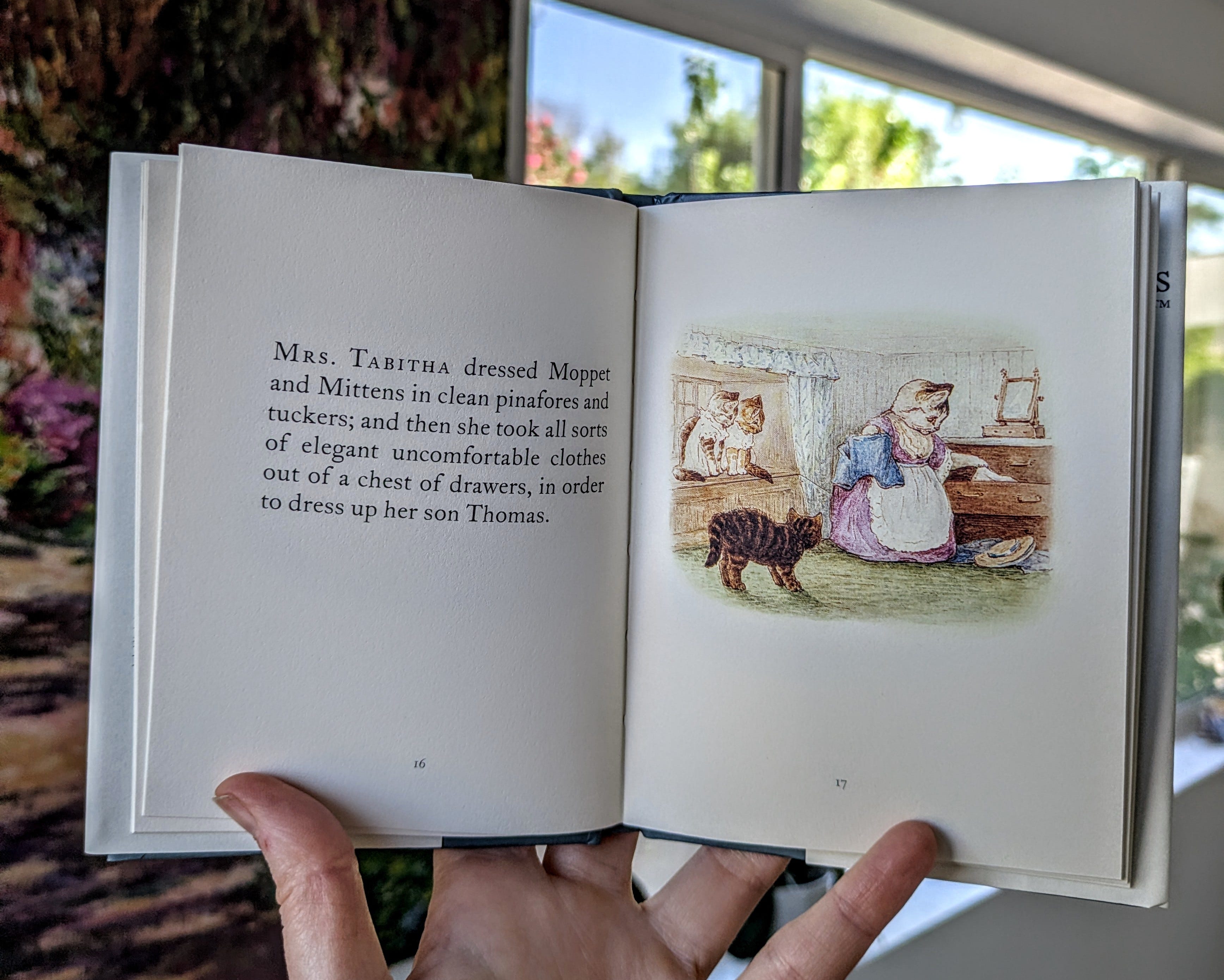
Fairy tales are wonderful. You really must read them (see above). But please don’t neglect living history and science books.
Read them real stories about real people who were brave, courageous, and kind.
My children were introduced to ancient pyramids, Greek ideals, Roman mastery, the rise of the Byzantine empire, Zang dynasties, and much much more. We read beautiful books about flowers, rivers, oceans, and hummingbirds and whales.
In addition to filling children with wonder about the world, these books also strengthen reading comprehension, vocabulary, and background knowledge—all of which make future reading easier (yes really - here’s the study).
A child fascinated by the world is naturally motivated to read more about it.
✨Teach Reading Without Losing the Magic
Reading is Best Learned by Actually Reading
Phonics is by far the best way to teach reading. But phonics becomes much more meaningful when children immediately use those sounds to read real books. Find early readers introduce a few sounds and then immediately place them into stories (my favorites beginner ones in the prior post).
But many parents stop phonics too early.
There may only be 26 letters, but children still need to master dozens of phonemes, spelling patterns, and decoding rules. Y - makes 4 different sounds for example.
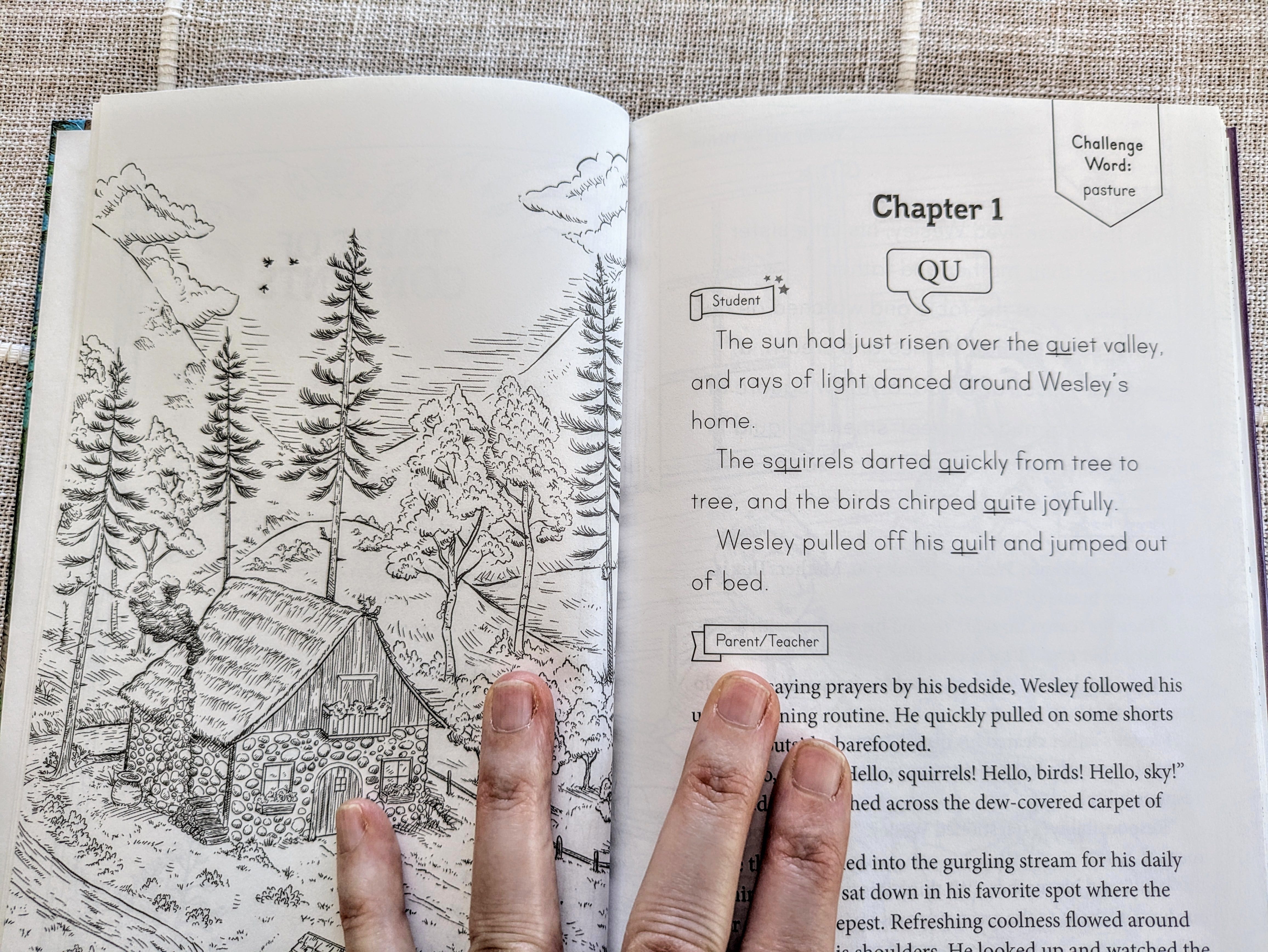
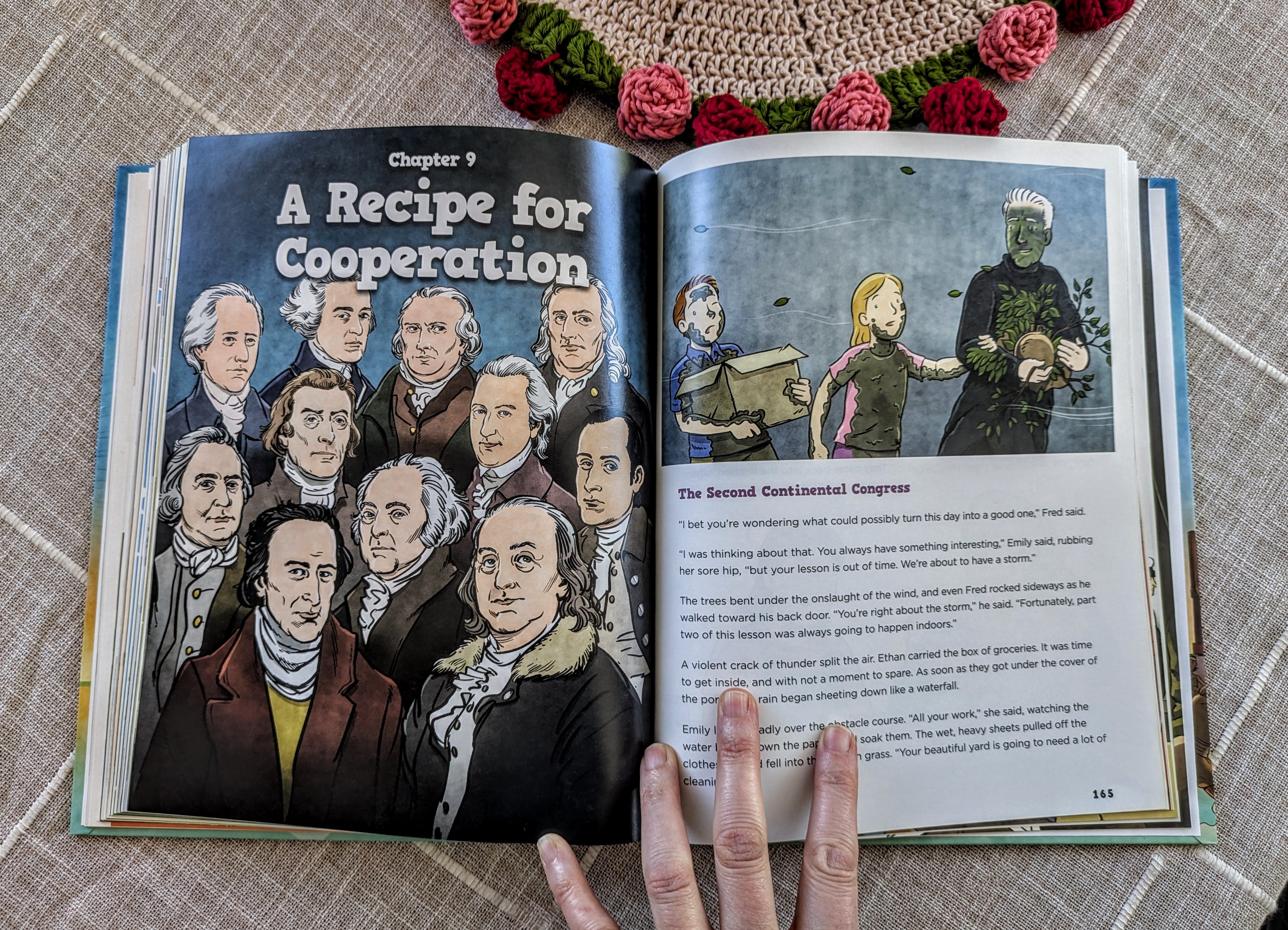
I continued phonics instruction through third grade. But it looked a bit different. If we are still drilling letter sounds, this will get quite dull. Instead find books that integrate phonics naturally into stories (see above picture).
Finally, flip the script and let your kids read to YOU. They feel so grown up doing this, and honestly it’s one of my favorite memories with both of my children. My favorite book series (above) is a collaborative read. You both read some parts.
PS. Letter sounds should be taught holistically with writing — but more on that in Falling in Love with Writing.
Let Them Choose Books They Love
When I first got my library card, they told me I could only check out 25 books. “Twenty-five books? Who would ever check out that many?” I thought.
Well, the answer was me.
Eventually I got my children cards so we could check out more than the limit.
Go to the library’s early readers section and let your kids pick whatever floats their boat (unless it’s age or morally inappropriate). Early readers exist in almost every interest imaginable: animals, trucks, princesses, science, jokes, adventure, movies, history. Literally everything. Let your kids pick.
Our goal in these early years is to establish the habit of reading. The daily desire to pick up a book. Don’t fret the quality of the books they chose for themselves. They’ll be plenty of time to gently nudge them in the right direction. We’ll go deeper into that in Deepening a Love for Reading ages 8-10.
What matters most during these years is joy and delight.
Don’t Scoff at Below-Level Books
One of the best things young readers can do is read books below their reading level.
You read that right.
Children need large amounts of successful, enjoyable reading practice. It builds confidence, fluency, stamina, and makes books into friends.
Use the books you read together to push their skills and the quality of books they read. Let them pick their own books for pleasure.
Read Together Longer Than You Think
Both of my girls read aloud to me through fourth grade (9-10 years old).
Besides just being the highlight of my day, it allowed me to gently spot-check their reading, reinforce missed phonics patterns, and help them learn to decode unfamiliar words. Here, I chose the books so they were classics and of increasingly complex language … but I still let them chose between 2-3.
These books need to be hard enough to occasionally stumble, but not so difficult that reading becomes a chore.
Having my then 7 year old read me Because of Winne-Dixie, a book I’d never read before, remains one of the top moments of my whole life. And I don’t exaggerate.
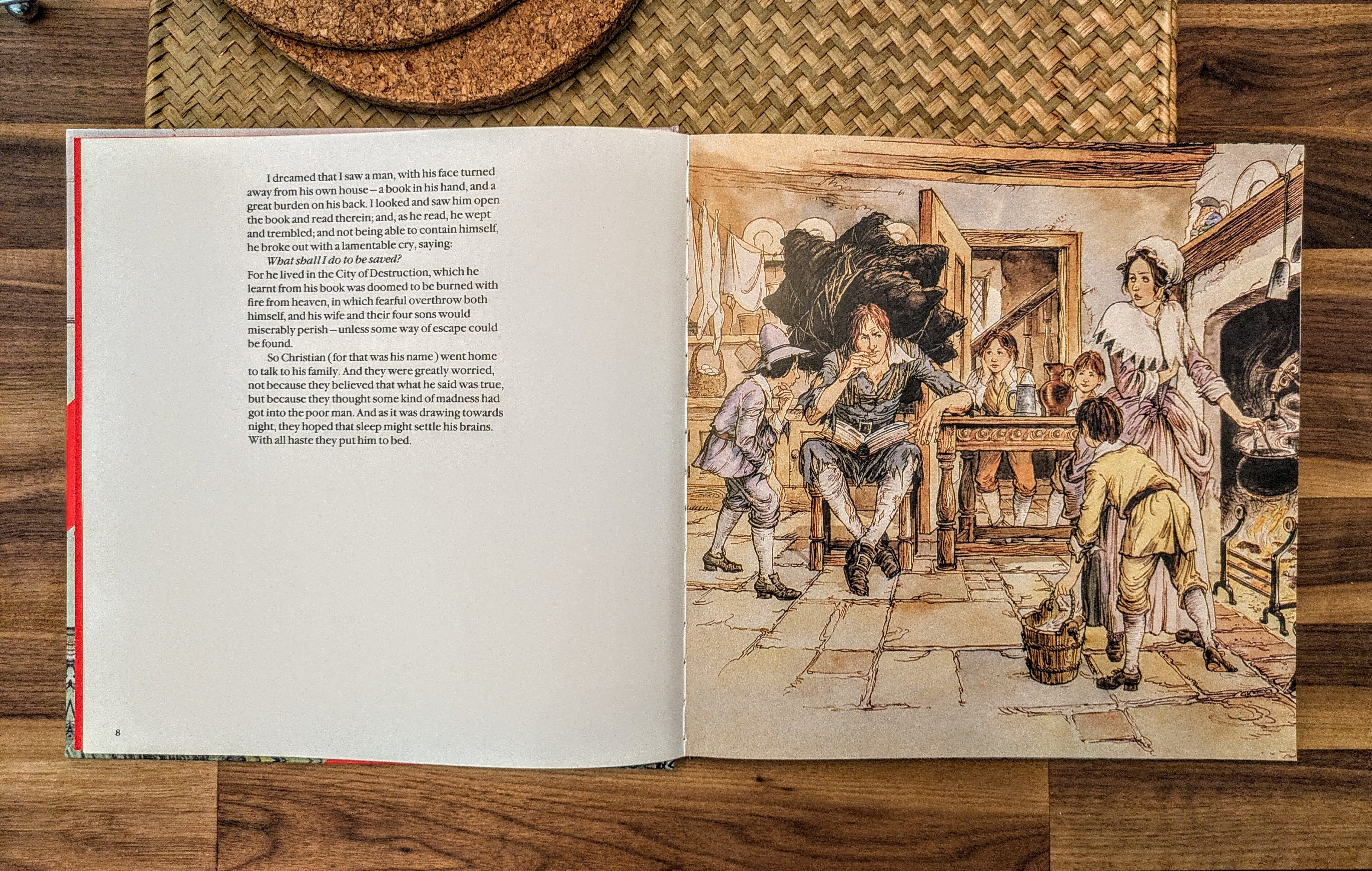
As I write this, I see no reason why my older kids can’t help read aloud the family books we are reading together. I’m going to start that right away!
Speaking of reading books as a family.
✨Raise Children in a Culture of Reading
Homes Teach Children What Matters
Your physical home environment is teaching your children. It speaks your values — sometimes louder than you do.
If your home is filled with bookshelves and cozy reading nooks, it says to your children → we are readers. If it’s centered around the TV and iPads, it says something quite different.
If we want children to fall deeply in love with reading, books must remain one of the most enchanting things in their world.
Create spaces that beckon you to read. For more read Your Home is Already Teaching Your Children.
Make Books Part of Your Family Identity
If there is only ONE thing you do on this list, make it this.
If you read and love books and show that to your kids, they will be interested. This gets easier with younger kids because they want that special time with mom and dad reading just like their big sister/brother.
And make sure you are reading physical books.
When my kids were little, if I was reading a book on my phone — my kids were nowhere to be seen. But if I was reading a physical book, I’d have two kids sitting next to me reading their physical books.
Books became what we did and who we were.
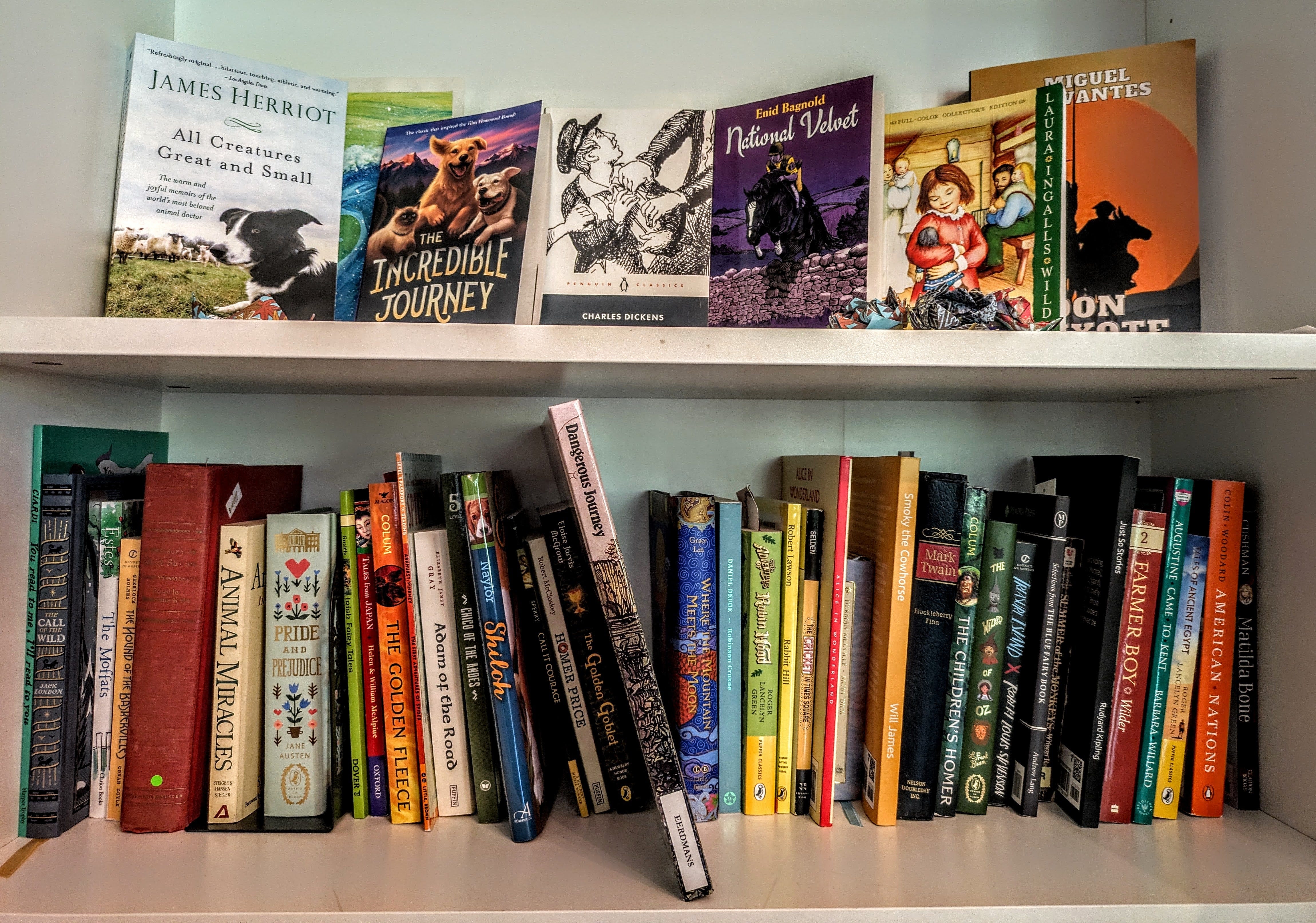
Start a home library, even if it’s tiny. Display books prominently. Rotate them occasionally so they can be rediscovered — works for older kids too!
You might like: How to Build a Home Library
Let Them Share Stories
It’s not just important that our children can read, they must understand what they are reading. Schools measure comprehension by asking children questions.
Who did what?
What happened next?
Why did the character feel sad?
But there is a far more delightful way to ensure children are understanding and relating to what they are reading.
Narration. (Thanks Charlotte Mason)
Ask your child to run tell Dad or Grandma or their best friend what happened in the story. Invite them to draw a scene or invent a different ending.
Children love this! Narration transforms reading comprehension tests into a joyful, loving way to connect with others. It’s also been evaluated by modern scientists and shows it improves retention. Another bonus is it’s a great building block for writing, but we’ll talk more about that later.
Narration is one of the most important educational tools I know — and for most children it is utterly delightful (great for history too).
✨Final Thoughts
In these early years, children are forming a relationship with books.
The goal is not simply a child who can read, but a child who loves to.
🌺May your home be filled with beautiful books and children who cannot wait to turn the next page.
If you’re still wondering how to make this all come together in real life I’ve gathered it for you below!
I’ve included:👇
Answers to questions I’m asked most often
When should my child start — and how do I know they are ready?
What if my child hates phonics?
What if my child is “below grade level”?
What if my child is still not interested in reading?
What if they only want to read graphic novels?
How do I choose books at the right reading level?
What does teaching reading look like in real life? Can you give me a schedule?
And more…
Resources we actually used
My favorite living books, phonics readers, and read-aloud resources
✨Paid subscribers are also always welcome to ask their own questions — either privately or in the comments — so we can continue learning together.
PS. The Q & A and resources got so long your email service might clip it. (most common in Gmail). If so, it lives in full on my website. Reach out if you have trouble.